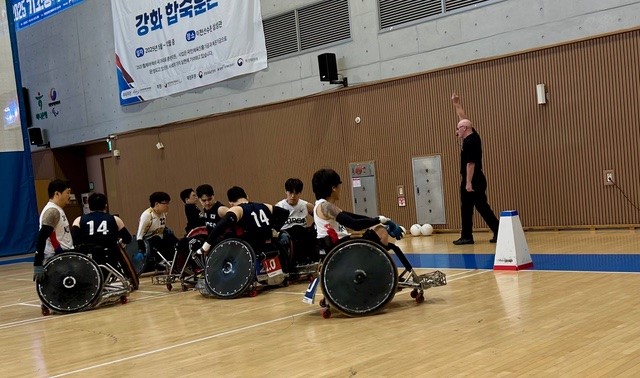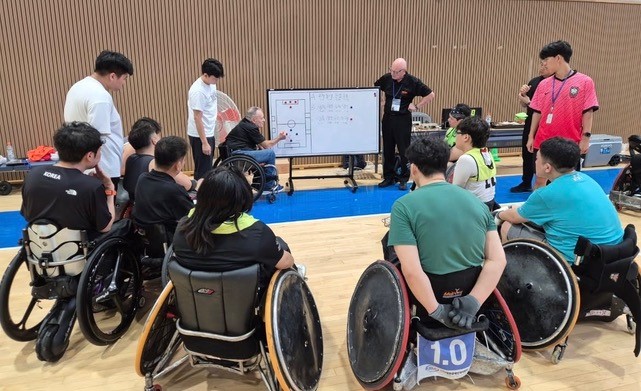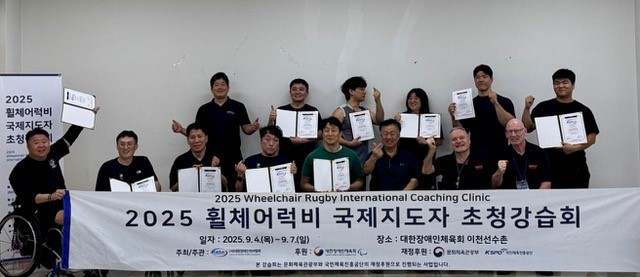
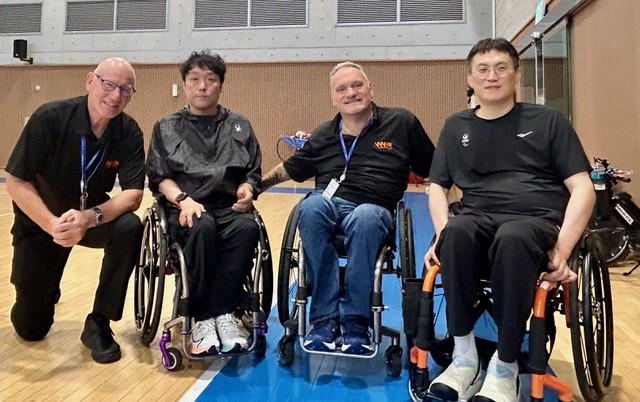
Over eight incredible days in Icheon, I had the privilege of working alongside my colleague Simon Starr, supporting Korean coaches and players as they developed their skills, shared ideas, and grew together through the game of wheelchair rugby.
✨ Day 1 started in the classroom, exploring rules, planning, safety and coaching strategies.
✨ Day 2 moved into tactics and practice delivery, with coaches stepping into rugby chairs to run 20-minute sessions.
✨ Day 3 was all about full-court learning, attack and defence drills, rotating skill zones, and live feedback from players.
✨ Day 4 brought the energy of match-day, scrimmages, timeouts, special plays, and full refereed scenarios.
One of the most rewarding parts of this clinic was overcoming the language barrier. 🤖🎧 With the help of AI technology and real-time earbud translation, every discussion, drill, and debrief became an opportunity for genuine connection. I watched coaches light up as their questions were understood instantly, and players felt heard in real time. Technology didn’t replace the human element — it amplified it, making collaboration seamless and meaningful.
💡 Beyond drills and tactics, this clinic was about confidence, connection, and growth. The commitment and openness shown by the coaches and athletes was inspiring.
Next up ➡️ National Team Camp (9–11 Sept) – this is where the focus shifts to supporting the national coaches, enhancing their ability to guide elite athletes, refine strategies,tactics and strengthen overall performance at the highest level. 🇰🇷🔥
A huge thank you to the Korea Wheelchair Rugby Association (KWRA) for their hospitality, organisation, and full engagement throughout the clinic. Your passion for developing the game is evident, and it was an honour to be part of this journey with you. It was a real privilege to contribute to the growth and success of both the coaches and athletes. 🙌
Rob Tarr
Head of Coach Education Programmes